Showing posts with label Tavistock. Show all posts

Saturday, August 4, 2012

Tavistock #4: Dartmoor Prison

Yesterday I caught a local bus from Tavistock to Princetown, Two Bridges, Postbridge and back to Princetown, high and lonely on the moor, the location of Dartmoor Prison. I had an hour in Princetown before the only other bus returning to Tavistock came through. I popped into the High Moor Visitors' Centre and then walked up the road to the entrance to the prison. There was a sign indicating an entrance for visitors so I rang the bell. A very pleasant warden appeared and I asked if I could look around the prison. No, he said, with a smile, I couldn't - it was a working prison with 600 inmates. Duh! I thought the prison had long ceased operating and that just the buildings remained as part of the Dartmoor Prison Museum!! Lots of people make the same request, said the very accommodating warden. Well, I guess that's the first and last time I'll ask to be let into prison. Actually I was disappointed because the buildings look so bleak and formidable, I wanted to get a better view of them. What a miserable place to be incarcerated.

There are multiple buildings like this one
Entrance
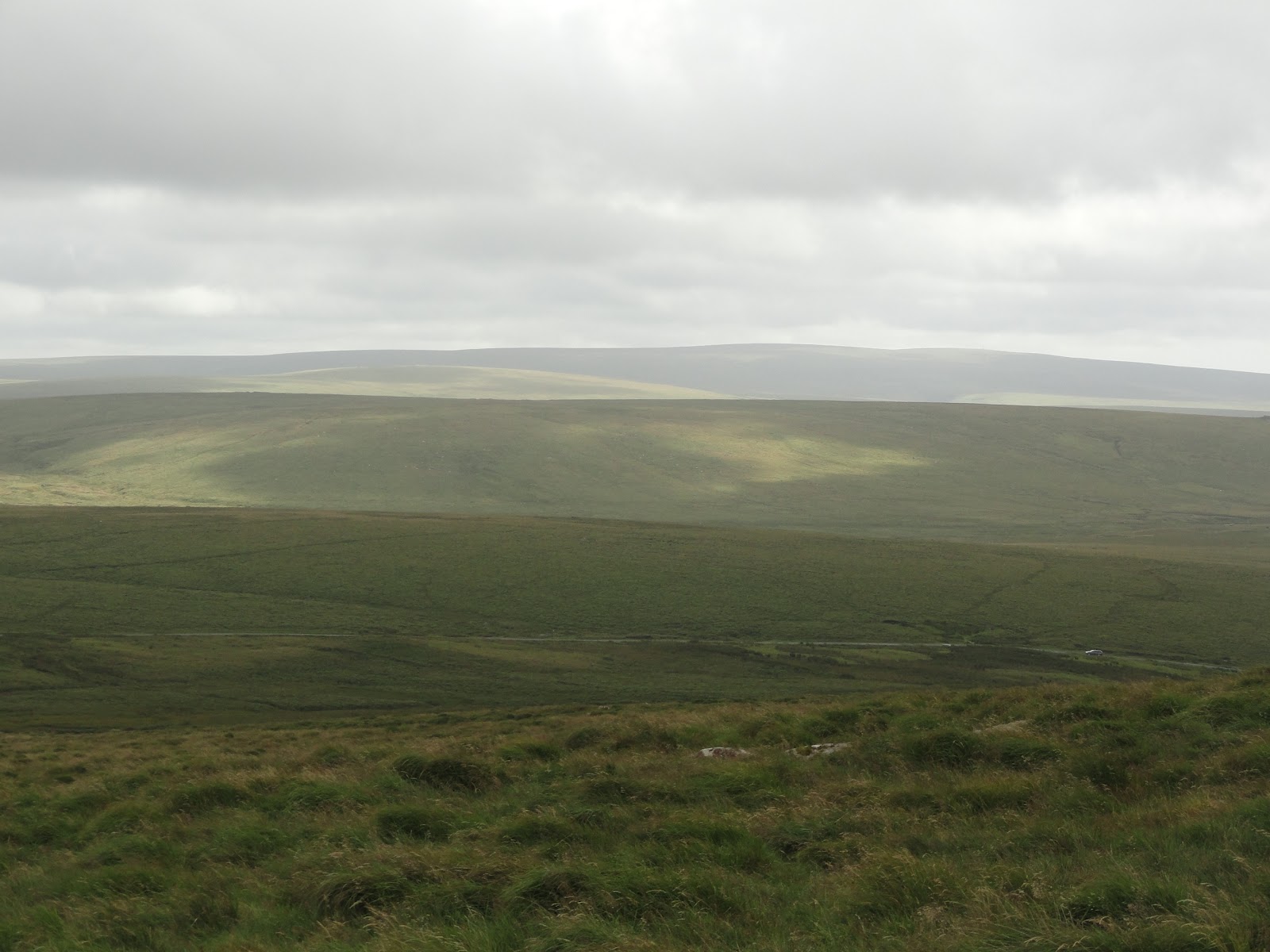
The moor from Princetown - nowhere much to escape to
Princetown and the surrounding moor was the inspiration for Conan Doyle's The Hound of the Baskervilles. Not surprising.


Friday, August 3, 2012

Tavistock #3

If Holland is red/brown brick, Tavistock is grey stone - or whitewashed grey stone. It sits compactly in the valley of the River Tavey with a history going back to the bronze and iron ages. An abbey was founded in 961, destroyed by Danes and rebuilt. Some ruins of the original abbey remain. 
In 1105 a Royal Charter was granted by Henry I to the monks of Tavistock to run a weekly "Pannier Market" (so called after the baskets used to carry goods) on a Friday, which still takes place today. In 1116 a three-day fair was also granted to mark the feast of Saint Rumon, another tradition that is still maintained in the shape of the annual "Goosey" fair on the 2nd Wednesday in October. 
By the 14th century Tavistock was at the centre of the tin mining industry. 
Tavistock was one of the four stannary towns appointed by charter of Edward I, where tin was stamped and weighed and monthly courts were held for the regulation of mining affairs. 
As tin mining waned the cloth industry prospered later to be replaced by copper mining. (Reminds me of the current shift from sheep to cattle in Canterbury - how much the fortunes of a community are tied to its economies). The town owes much of its prosperity to the Dukes of Bedford who made a fortune from mining and invested significantly in the town's buildings, great and small. 


Part of central Tavistock. The Pannier Market is located behind these buildings
Looking down on part of the town from the old railway viaduct
More Bedford cottages
Yesterday I walked along the canal that was dug in the early 1800s to carry copper to Morwellham Quay on the River Tamar, where it could be loaded into sailing ships. This was a beautiful two-hour or so walk, very peaceful, through the intermittent showers!


Railway viaduct on the canal walk. These arches are much bigger than they appear in the photo


Sir Francis Drake was born at Crowndale Farm which I also passed on this walk.


Thursday, August 2, 2012

Tavistock...

Well, so much in a short space of time I'm going to cheat and do a 'picture-post', leaving the writing for tomorrow morning. Niki this one is for you - some of the purchases I made in Tavistock today...


Devon Blue
Not so sure about 'brewed in the old nuclear bunker...'


With the cheese, the beer and the pasty I walked into the different shops and said I'm a visitor and I want to try some 'local' produce. The pasty weights a ton.

Shop where I bought the beer
Shop where I bought the pasty
There is a story about these two shops but I'll save that for next time...